
Dan Charles
12/01/2026
Table of Contents
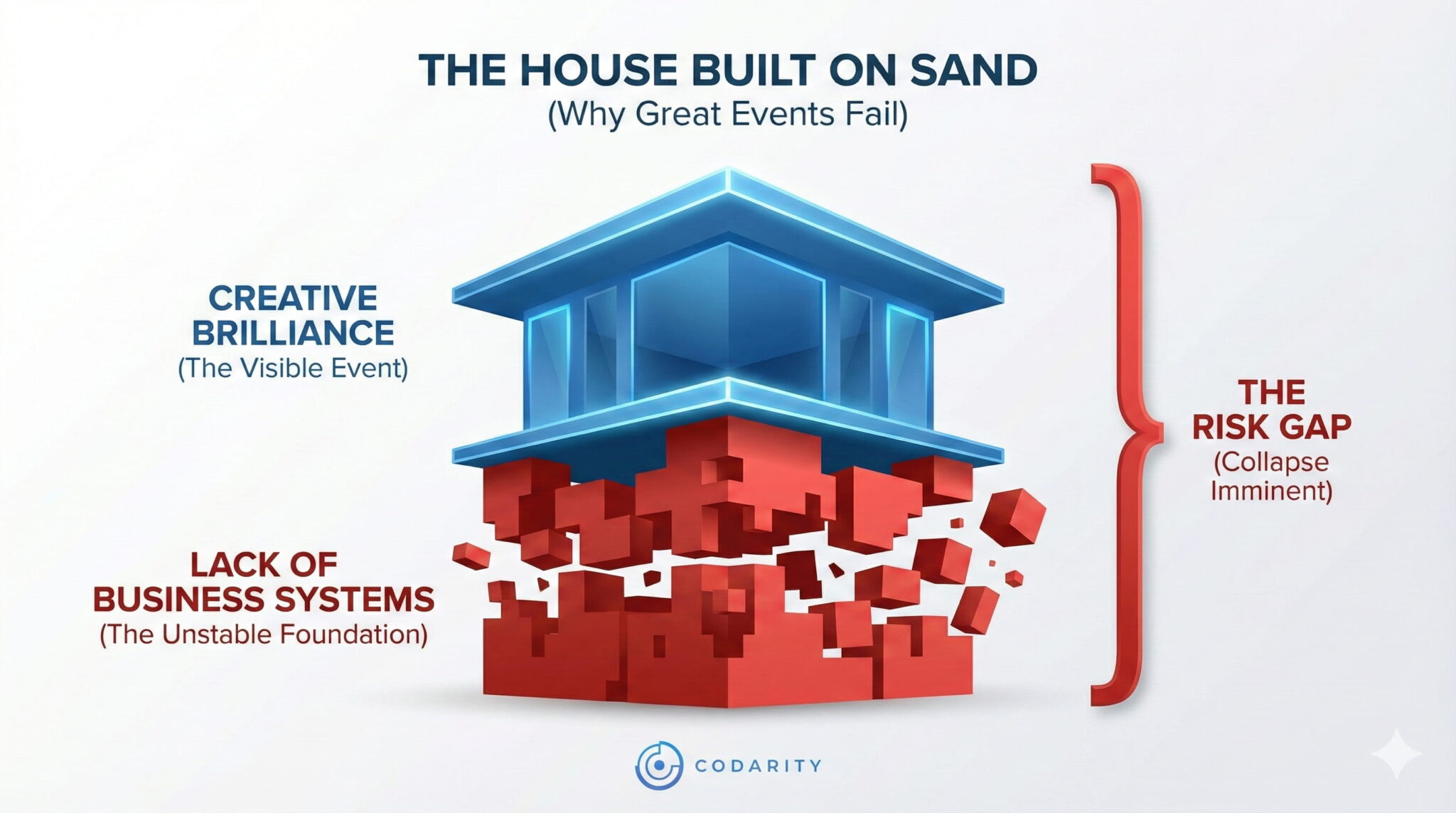
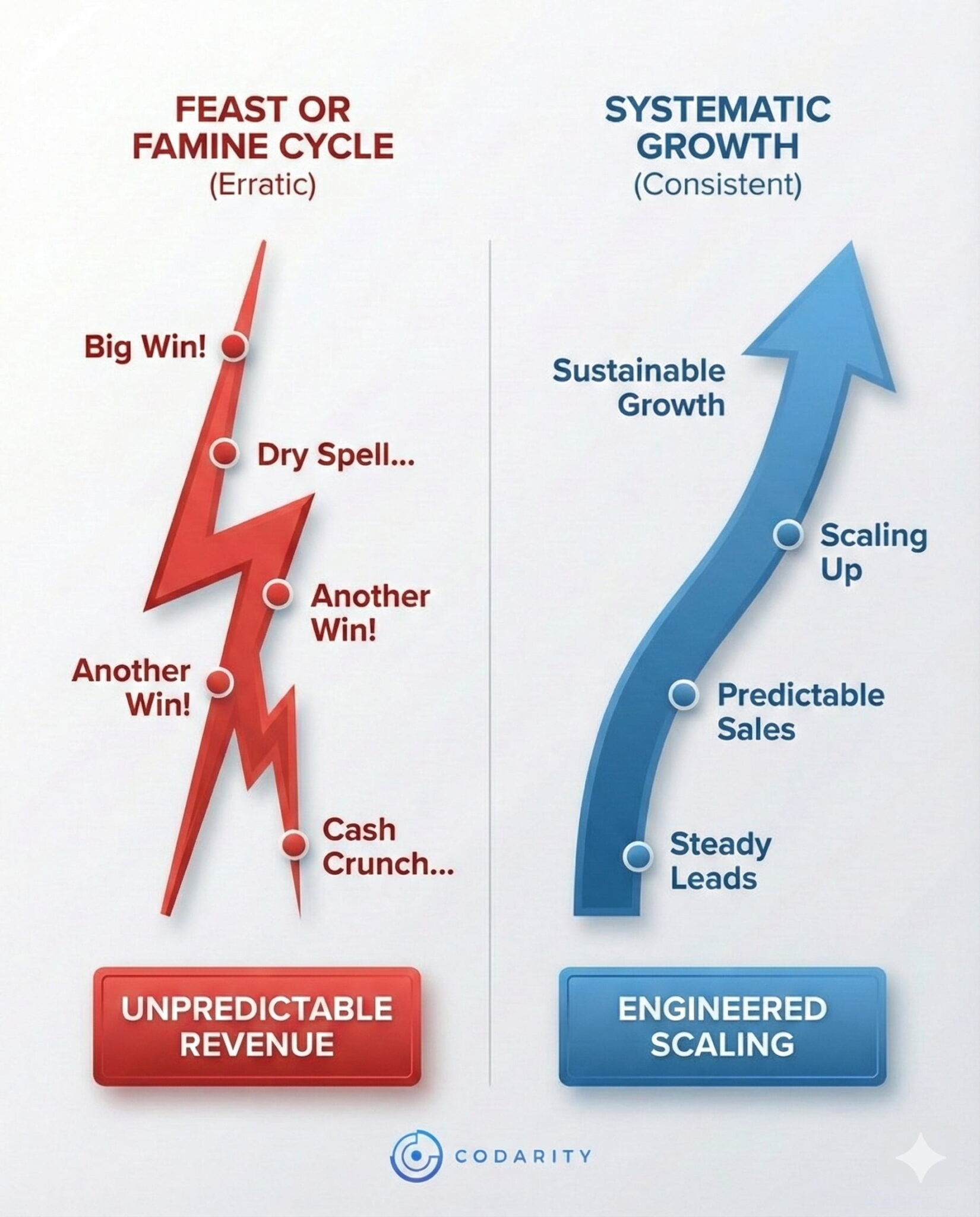
Look, I’ve been there. You’re creating incredible experiences – the kind that clients rave about for months. Your portfolio is stunning. Your creativity is sharp. But somehow, you’re watching competitors with mediocre work book more gigs, charge higher prices, and seem to have a steady pipeline while you’re stuck in the feast-or-famine cycle.
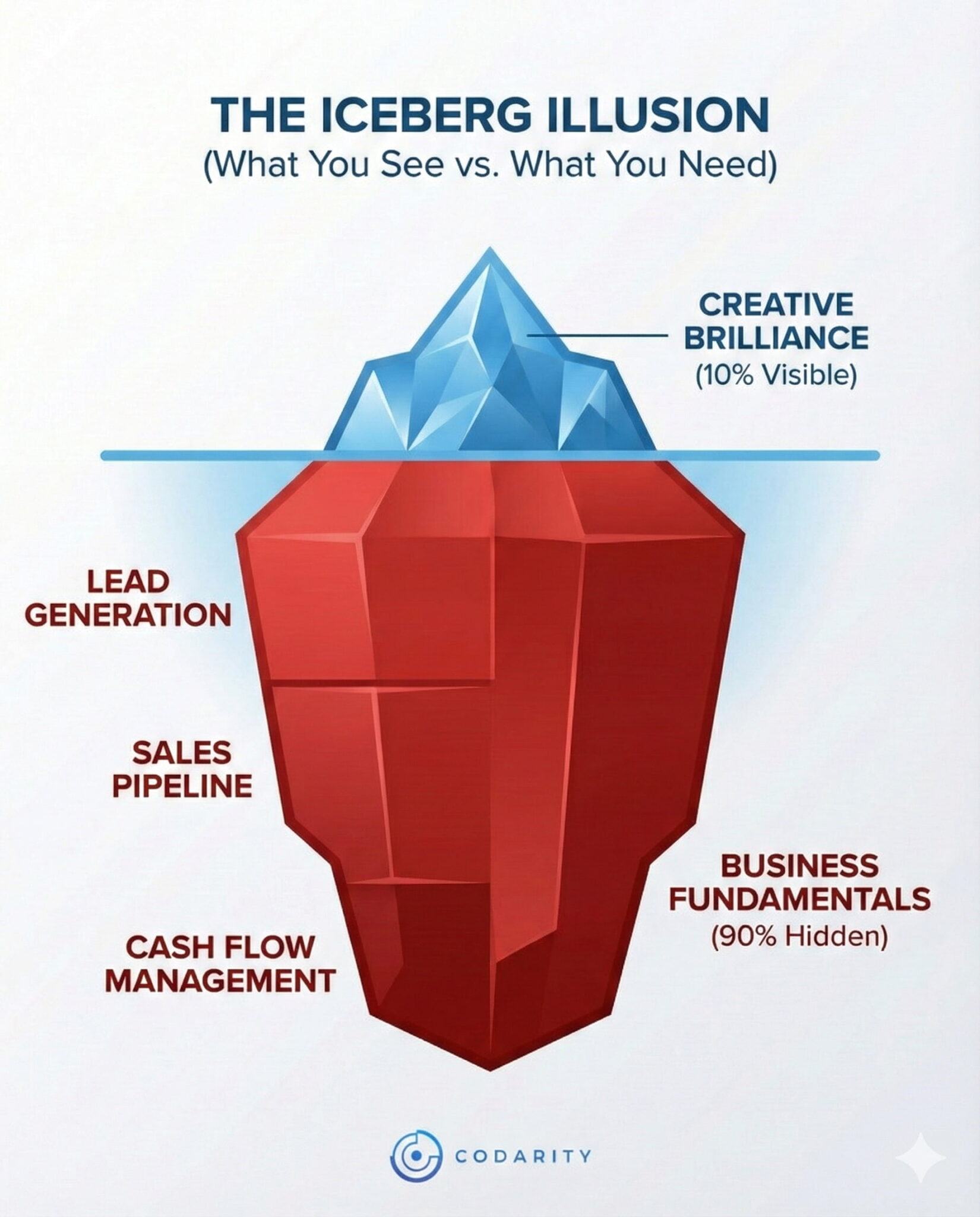
Here’s what nobody tells you when you’re building an event business: creative brilliance alone won’t keep the lights on. I learned this the hard way after scaling events from 60-person gatherings to 3000+ capacity productions. The event industry trains us to design experiences, coordinate logistics, and wow clients. But systematically generating leads? Managing a sales pipeline? Building visibility when we’re between projects? Nobody teaches us that stuff.
And that gap – between creative mastery and business fundamentals – is where talented event businesses quietly disappear.
Key Takeaways
- The visibility paradox: When we’re delivering incredible events, we’re invisible to new prospects. By the time we’re ready to market again, the B2B buying journey that takes 211 days on average has already moved on without us.
- Creative excellence creates a dangerous trap: We pour everything into delivering perfect experiences, which leaves zero capacity for systematic marketing. Meanwhile, average competitors with basic systems consistently outpace us.
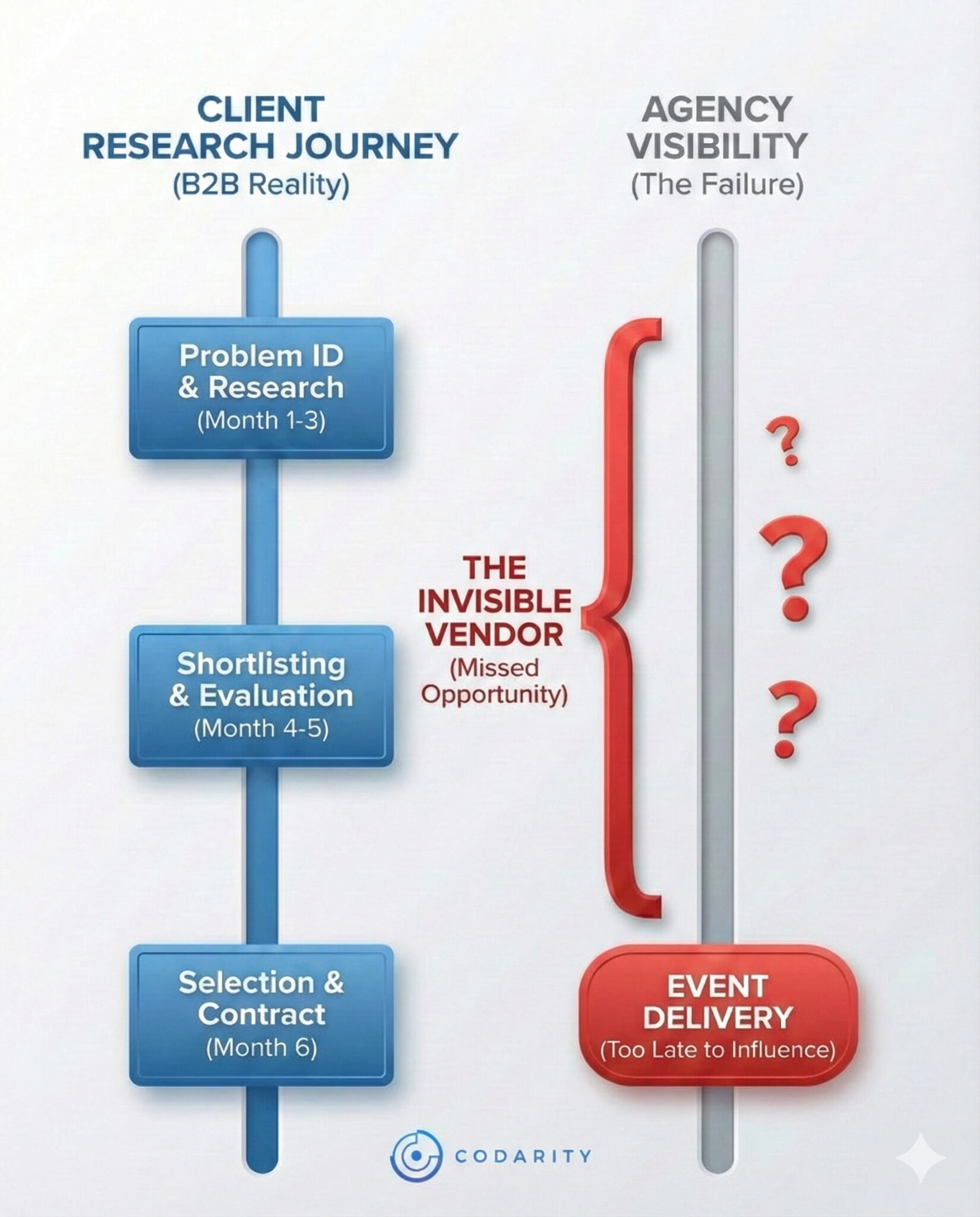
- The seven-month marketing gap: Event businesses operate in cycles – proposal, planning, execution, recovery. That’s typically 4-7 months where we’re not actively marketing. But corporate buyers are completing 70-80% of their buying journey digitally before ever reaching out.
- Systems beat talent in the long game: The event pros who scale aren’t necessarily the most creative. They’re the ones who figured out how to maintain visibility and nurture relationships even when they’re heads-down delivering events.
- Cash flow kills faster than lack of talent: 80% of failed businesses cite cash-flow problems, not lack of skill. In our industry, cash flow problems come from the revenue rollercoaster we accept as normal.
The Revenue Rollercoaster We’ve Normalized
I used to think the feast-or-famine cycle was just part of being in events. Big project comes in, we’re slammed for months. Event delivers, client loves it, we take a breath. Then… silence. We scramble to find the next one.
Here’s what I finally understood: that pattern isn’t inevitable. It’s a symptom of working without marketing systems.
When you’re deep in event delivery, you’re invisible to prospects. They can’t see your brilliance because you’re not showing up anywhere they’re looking. And by the time you surface for air and start marketing again? The B2B buying journey has already happened without you.
Corporate event buyers don’t wake up one Tuesday and decide they need an event by Friday. Research shows that B2B buyers start with extensive online research long before they ever reach out. They’re Googling “corporate event planners near me” or “conference production companies” months before their event. They’re comparing options, reading case studies, checking social proof.
If you’re not showing up consistently during those months of research, you’re not in the consideration set. Period. This is why having a coherent message across all your marketing technology matters so much – prospects are encountering your brand across multiple touchpoints during their research phase.
Why “Just Being Better” Doesn’t Cut It
I competed on creativity for years. Made sure every event was a showstopper. Built an incredible portfolio. And wondered why competitors with okay work were booking more consistently.
Here’s what the industry doesn’t tell you: at the corporate level, buyers assume a certain baseline of competence. Once you clear that bar – and honestly, it’s not that high – the deciding factors become trust, visibility, and convenience.
The event business with decent work and systematic follow-up beats the creative genius who ghosts for three months every time.
That’s brutal to accept when you’ve poured your soul into mastering your craft. But it’s reality.
The Visibility Gap Nobody Talks About
When prospects are ready to buy, they’re not searching for “the most talented event planner who’s too busy delivering amazing events to answer their phone.” They’re hiring whoever showed up consistently during their research phase and made it easy to take the next step.
Your competitors aren’t necessarily better at events. They’re just better at being visible when it matters.
I see this pattern constantly working with event businesses at Codarity. Incredibly talented teams, stunning portfolios, amazing client testimonials. But when we audit their digital presence, it’s like they don’t exist online. No consistent content. Website hasn’t been updated in two years. Social media posts only when they’re promoting a current event.
Meanwhile, their average competitors are publishing weekly, running ads, showing up in search results, nurturing email lists, and staying top-of-mind.
The Real Cost of the Creative-Only Approach
Let’s be honest about what happens when talented event pros ignore the business side.
You pour everything into delivering an incredible event. Client is thrilled. You’re exhausted. You take some time to recover. Maybe update your portfolio. Then you realize… you have nothing lined up.
So you start hustling. Cold outreach. Asking for referrals. Maybe some panic posting on social media. And if you’re lucky, something comes through before the cash flow gets scary.
But here’s what kills businesses: information industry companies have a 25.8% first-year failure rate, and it’s not because they lack talent. Cash-flow problems account for 80% of business failures. In our industry, cash flow problems come from the revenue rollercoaster we accept as normal.
I nearly learned this lesson the expensive way. Had a major event cancel after we’d already invested heavily in planning. No backup pipeline. Just assumptions that the next big project would materialize. That was my wake-up call.
What Actually Works: Integration, Not Separation
Here’s what I finally figured out after making every mistake: you don’t need to choose between creative excellence and business fundamentals. The event pros who scale master both.
Not because they’re superhuman. Because they build systems that work while they’re heads-down delivering events.
Automated lead nurturing that keeps prospects warm during your busy months. Content that gets created once and works for months. Marketing systems that run in the background while you’re focused on event delivery.
Research on marketing automation shows that lead automation can lift revenue by 10%+ within 6-9 months. Not because it’s magic, but because it keeps you visible and nurturing relationships when you’re too busy to do it manually.
This is exactly why we developed the 4-phase event marketing timeline system – it maps your marketing activities to your event delivery cycles so nothing falls through the cracks during busy periods.
The Path Forward (Without Sacrificing Your Creative Soul)
Look, learning systems and automation was brutal for me. I’m naturally creative. I wanted to design experiences, not build marketing funnels.
But here’s what I finally accepted: the event pros who scale are the ones who master what doesn’t come naturally. Not because we’re not smart enough, but because nobody teaches us this stuff in the first place.
You don’t need to become a marketing expert. You need systems that:
- Keep you visible to prospects during your 4-7 month event delivery cycles
- Nurture relationships automatically so prospects remember you when they’re ready
- Capture leads 24/7, not just when you remember to check your email
- Build your authority in the background while you focus on client delivery
This isn’t about working more hours. It’s about making the hours you already work count toward future business, not just current projects.
The research backs this up: the average B2B buying journey takes 211 days. That’s seven months where prospects are researching, comparing, and making decisions. If you’re only visible during the few weeks between events, you’re missing the entire window when buyers are actually making decisions.
Beyond Feast or Famine
The event businesses that thrive year-round aren’t necessarily the most talented. They’re the ones who figured out that systematic marketing isn’t optional – it’s what separates sustainable businesses from talented freelancers riding the revenue rollercoaster.
Corporate buyers are completing 70-80% of their decision-making before they ever reach out. If you’re not showing up during that research phase, you’re not getting considered – no matter how talented you are.
I wasted years and over £50k learning this the hard way. Competed on creativity alone. Ignored the business fundamentals. Watched less talented competitors book consistently while I stressed about pipeline.
If you’re reading this and seeing yourself, you’re not alone. Every successful event pro I work with struggled with this transition. The good news? Once you have the systems in place, you get to focus on what you’re actually good at – creating incredible experiences – while the business development runs in the background.
Want to see where your event business stands?
Take our Event Business Growth Readiness Assessment – it takes 3 minutes and reveals exactly which systems are missing (and what to fix first).
GET YOUR SCORE INSTANTLY!
Get Free Event Business Growth Readiness Score
Take our 3-minute interactive scorecard and instantly get a roadmap to unlock year-round profitability for your event business
Jan. 05, 2026
Behind the Podcast: What Event Businesses Really Need to Break the Feast-or-Famine Cycle
Nov. 21, 2025
The Real AI Revolution in Events Isn’t What Cvent’s Selling
Nov. 17, 2025
Why Your Event Business Doesn’t Need More Martech: It Needs a Coherent Message
Nov. 04, 2025
